The AI-Enabled Field Sales Force
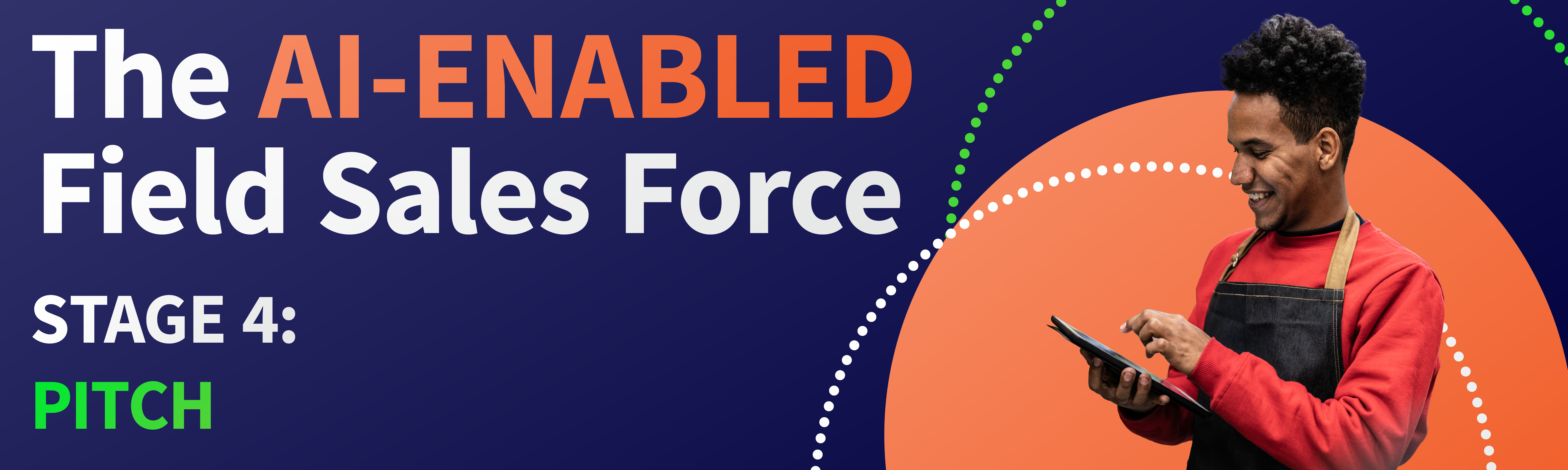
Stage 4: Pitch
What would your numbers look like if more store buyers said yes on the spot, and the order was placed before you left the aisle?
By Sam Barclay, Chief Growth Officer, StayinFront
The Process
If you are just joining the series, sales enablement on the StayinFront Retail Optimization Platform runs across five stages. Opportunity works out the Size of Prize in every outlet for every SKU and plans visits with StayinFront Dynamic Routing. In-Store Conditions builds a realogram and instantly measures OSA, share of shelf, and quality of shelf. Coach shows the problem, the options, the reasons behind them, and the recommended action. Pitch tailors the conversation to that buyer at that moment, tracks it, and automates it into an order. Measure and Goal Set shows the ROI of every action and sets granular goals.
This post is about stage four, where all of that groundwork finally gets put in front of the buyer. If the pitch does not land, everything the earlier stages uncovered goes to waste.
The Last Three Feet
There is an old retail phrase about the “last three feet,” meaning the distance between the shopper and the product. In field sales, the last three feet is the distance across the counter between the representative and the store buyer, in the ninety seconds or so before the buyer’s attention moves elsewhere.
Everything that happens before the visit is preparation for that moment. The Size of Prize, the realogram and the prioritized Next Best Action all lead up to it, and none of it is worth anything if the representative cannot make the buyer see it.
The same fact lands differently in every store. An independent grocer who owns his outlet may care about cash cycle and shelf space he cannot get back. A convenience chain area manager may care about compliance and consistency, and a major grocery banner store manager about the inventory control metrics he is personally measured on. One generic pitch deck will not work for all three.
In the past, the answer came down to the talent of each representative. The best ones read the room, reframed the same data three ways, and closed the sale. The other eighty percent delivered the deck as written. That variance is your execution gap, and training alone will not close it.
The Pitch stage focuses on making what your strongest representatives do by instinct standard across the whole team. The platform creates a custom pitch for that store buyer, for that moment in time, and gives the representative options to work with instead of a single script. It leaves a trail of breadcrumbs showing how each pitch was used, so the results can be analyzed later, and it automates the administrative work of turning a sales pitch into an order.
We built two solutions for exactly this moment. Augment®, a division of StayinFront, incorporates augmented reality (AR) into your sales pitch to sell in displays and promotions. The buyer can see and interact with an immersive, customized proposal that shows them exactly how the display will look in their own store and aisle, at its real size, before a single unit ships.
While Augment® shows the buyer what the display will look like, AI-powered StayinFront Pitchbook® with Augment® builds the business case behind it. It delivers a fact-based, store-specific pitch unique to each outlet. Paired with Microsoft Power BI® and Copilot analytics, it arms your teams with actionable, data-driven insights to engage with customers in a more strategic and personalized manner. Used together, they turn a good conversation in the aisle into an order the buyer can see and trust.
Three Benefits That Show Up in Your Numbers
Showing beats telling, especially with space. The hardest thing to sell a store owner is floor space, because it is limited, visible, and something he feels he owns. “A two-meter secondary display of the chilled range” is easy to turn down when it is only words. With Augment®, he can see that display standing in his actual store, which makes it a concrete proposal he would have to argue against. He no longer has to imagine it, so saying yes gets a lot easier, and so does working through any questions.
Every pitch teaches the team something. Each pitch is tracked by store, along with how the buyer responded, which builds a dataset most organizations have never had. Over a few cycles, you can answer questions that used to come down to opinion. You can see which talking points close deals in independents compared with chains, which proof point works against a price objection, and which representatives are using which materials and how that links to conversion. Every representative can then bring those lessons into their next visit, with evidence about what works instead of another training course.
Pitch-to-order automation gives time back. It is the least glamorous of the three benefits and possibly the most valuable. In many field organizations, a successful pitch sets off a round of admin, as the representative writes the order, re-keys it, emails the confirmation, and logs the outcome. That work falls hardest on your most successful visits, which is the opposite of what you want to reward. With automation, a buyer’s yes turns straight into an order, with no extra data entry or follow-up. Representatives can put that time into the next store visit, and that is where the ROI adds up.
The Question Worth Sitting With
If you sent your top-performing representative and your median representative into the same store with the same data, would they make the same pitch? If not, does that difference live with one person or in a system the whole team can use?
When that know-how lives only with your best people, it leaves when they do. Built into the platform, it grows with every pitch your team makes.
What This Means for Your Field Team
The Pitch stage is when everything your team knows about a store becomes a buyer’s agreement, and ultimately an order. Every pitch also leaves a data trail, giving your team a sharper case for the next visit. That same tracking data feeds stage five, and over time, selling stops depending on a few gifted individuals and becomes something your whole organization does well.
We close out the series with Measure and Goal Set, and learn why correlation falls short and what changes once you can prove which actions actually drove the sale.
Sam Barclay is Chief Growth Officer at StayinFront. Want to see how many more of your store visits could end with an order? If a few top representatives are carrying your conversion rate, we would be glad to show you how to build what they do into every pitch, in a store like yours. Get in touch.
Know More. Do More. Sell More.